
Creatine Benefits for Health: Hype or Hero?
No one needs one more supplement, am I right? But hear me out for a second. Creatine. You’ve probably heard of it making the rounds.
I first heard of creatine benefits mostly for teens and young adults. Advertised as a muscle-enhancing supplement, it was common to find it in pre-workout products and other supplement blends. I honestly thought it was just for the cool kids trying to bulk up. Definitely not for me.
But then the perimenopause information started to make the scene … and there it was again … creatine.
So I took more notice. But still, I thought … why? Like any of us need one more supplement that arguably is more placebo than anything truly useful.
It didn’t take much research before I realized this might be one supplement I needed to try.
Are you creatine curious? Read on to learn why I changed my tune on this one and how creatine benefits many aspects of health, especially for women.
What is Creatine?
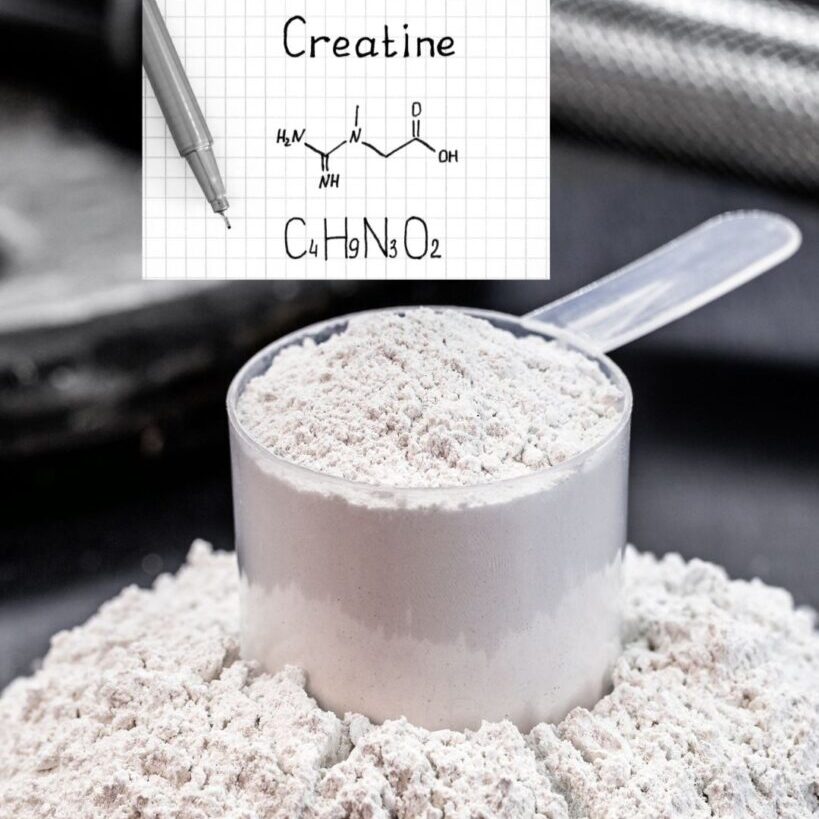
Creatine is a natural compound made in the body from amino acids. Its main job is to help your muscles make energy quickly. Stored mostly in the muscle tissues, creatine helps generate ATP, which gives our muscle energy.
More ATP in the muscle allows you to lift more, run faster and balance better.
What’s interesting about this helpful molecule is that our body makes about half of what we need all on our own. The rest we get from food such as meats and seafood.
Unfortunately, there are reasons our body’s creatine production starts to slow down. These are things like:
- Aging cells
- Reduced digestion and absorption
- Estrogen and progesterone fluctuations
As creatine slowly decreases in the body, it can affect not only our muscle strength but also other areas of the body. Let’s take a look at some of the unique ways creatine benefits our health.
Creatine Benefits for Muscle and Strength
One of the more well-established creatine benefits is for muscle performance. Creatine helps our muscles make ATP, and then we are better able to push harder when we lift weights, sprint, climb stairs, or do any higher-intensity workouts.
Additionally, there is evidence that creatine may help facilitate glucose getting into the muscles and also improve muscle hydration, all of which can help with overall performance and reducing fatigue.1
According to some recent studies:
- Creatine supplementation has been shown to help individuals improve muscle strength, regardless of age or previous exercise experience.2
- Adults under age 50 experienced significant improvements in muscle strength with creatine supplementation at just 5g per day.3
- Women over age 50 saw significant muscle-enhancing benefits from creatine supplementation when combined with resistance training.4
It appears that across all age groups, creatine can be useful for increasing and retaining healthy muscle.
Particularly for older adults, creatine could help achieve better muscle growth and thereby potentially prevent health risks that come with declining strength, particularly falls and declining metabolism.
Creatine Benefits For the Brain
A really exciting area of research is creatine and the brain.
Think about this: the brain requires and uses a lot of energy. In fact, the brain uses around 20% of our total resting energy!5 But our brain function starts to decrease as we age.
Could creatine increase energy availability in the brain, just like it does in the muscles, and help prevent cognitive decline?
This has been the focus of several recent studies. And the news looks good.
Studies on creatine benefits to the brain have shown possible improvements in:6
- Memory retention
- Focus
- Processing speed
This can be especially helpful when our brains need extra support, such as in times of high stress, sleep deprivation, aging, and hormone changes.
Speaking of hormone changes…
How Creatine Benefits Women During Perimenopause
Perimenopause is a time of huge hormonal transition for women. As estrogen and progesterone fluctuate, sleep may worsen, brain fog and memory issues may suddenly appear, recovery from exercise can take longer, and maintaining muscle can be more challenging.
These concerns sound like all the things we just mentioned creatine could help with … possibly a perfect fit for women during this pivotal life stage.
Unfortunately data on perimenopause and menopause specifically are limited, but we have research pointing to the help it can possibly provide related to the plethora of common menopause-related symptoms. Symptoms such as:7,8,9
- Muscle loss
- Lowered metabolism
- Inflammation
- Fatigue
- Brain fog
- Mood
- Poor sleep
I think it’s safe to say creatine could be a huge help to women during perimenopause and menopause. We need more studies for sure, but preliminary data suggest it’s certainly worth a try if you are battling any of the above.
Of course, always talk with your doctor first, but a little creatine could go a long way in helping your body weather the storm of hormone fluctuations.
How Much Creatine Do We Need?
Studies show that doses around 5g per day of creatine monohydrate seem to be effective for the benefits mentioned above. But, particular doses may be recommended in particular situations.
- Serious strength training: Studies suggest ramping up intake with 20g a day for a week can help saturate the muscles and see improvement a lot faster, while slowly ramping up with 5g per day can take up to a month to get creatine levels to the same point. Downside is that gastrointestinal side effects can occur with high doses, so some may prefer starting low and slow.10
- Brain benefits: Studies suggest 10g per day might be better for a brain boost, as it takes a little more work for the body to get creatine past the blood brain barrier and into the brain areas where we need it.5
- Perimenopause and general health: 5g per day seems to be a good maintenance dose for most. But you may want more or less, especially when it comes to brain health concerns. Talk with your doctor to come up with a plan.
And as with anything, there can be side effects. Occasional gastrointestinal symptoms, such as nausea, diarrhea or stomach cramps, may occur.
Some may also experience uncomfortable water retention. Water retention is somewhat normal as creatine helps to hydrate the muscles, but for some it can feel excessive and uncomfortable. Try cutting down the dose or take a break to see if symptoms improve.
A Dietitian’s Personal Take on Creatine
Like I mentioned, I resisted creatine at first. Supplements come with so much hype and marketing, and so I tend to be skeptical. Plus, at the time I didn’t see any health gaps that creatine could fill.
And then perimenopause hit with a vengeance. While most symptoms were solved with some hormone support, one nagging issue was this new inability to retain muscle. It felt like the movie Groundhog Day. Go to gym, workout, then repeat workouts with no gains whatsoever. In fact, I often felt weaker week to week. What was happening?
This was not ideal for someone who loves to run and hike and who also has a family history of osteoporosis. So I gave in.
And you know what? It’s working. I can literally feel my muscles work harder, longer and with less soreness. The results are visible. While my recovery time still sucks (hello being older), it has improved. So that’s my creatine story and I’m sticking with this plan for now.
Final Thoughts
While creatine is certainly not needed for everyone, it could be a good choice for older adults and those going through hormone fluctuations to prevent gradual muscle loss and other associated health risks.
Personally as a dietitian in these categories, I’ve seen it work. But is it necessary? Certainly not.
Always address diet, sleep, exercise and other lifestyle factors first. Creatine is a not a cure-all for poor habits. And it certainly won’t help you make muscle if you aren’t working out.
But, creatine can come alongside a healthy diet and exercise routine to boost what you are already doing.
As with anything, the science continues to evolve. And I for one will be watching.
Questions if creatine or other supplements are for you? Let’s talk! I love to help people cut through the confusion and make an appropriate supplement plan to work with their health plan and goals.
- https://pmc.ncbi.nlm.nih.gov/articles/PMC11547435/
- https://pmc.ncbi.nlm.nih.gov/articles/PMC12665265/
- https://pubmed.ncbi.nlm.nih.gov/39519498/
- https://pmc.ncbi.nlm.nih.gov/articles/PMC8619193/
- https://pmc.ncbi.nlm.nih.gov/articles/PMC8912287/
- https://pubmed.ncbi.nlm.nih.gov/39070254/
- https://pubmed.ncbi.nlm.nih.gov/35276903/
- https://pubmed.ncbi.nlm.nih.gov/39553021/
- https://pubmed.ncbi.nlm.nih.gov/41470776/
- https://pubmed.ncbi.nlm.nih.gov/34445003/
